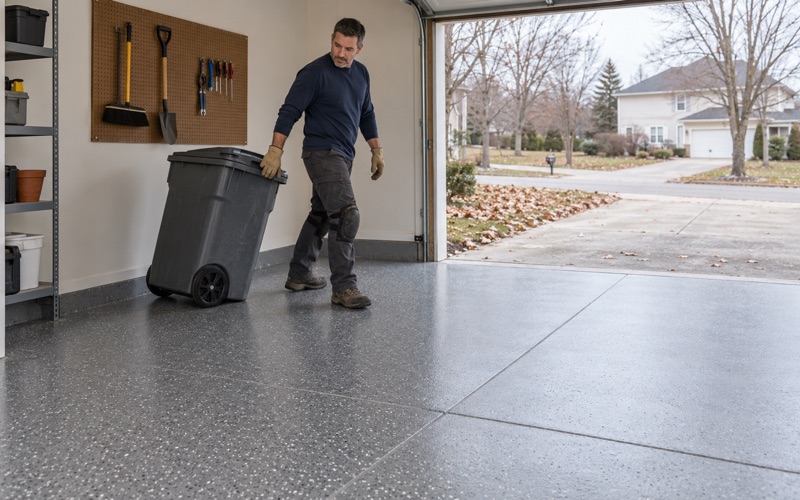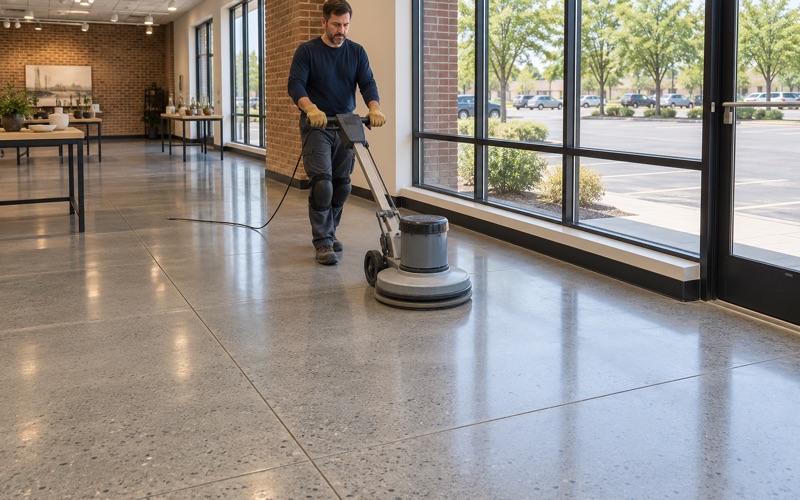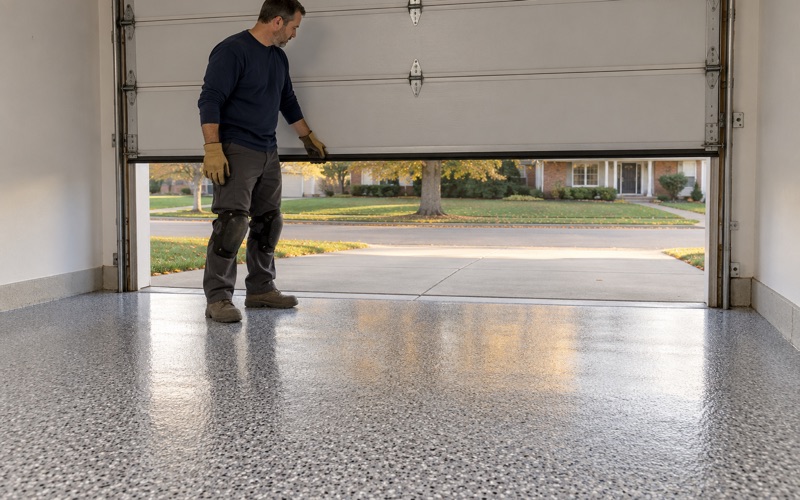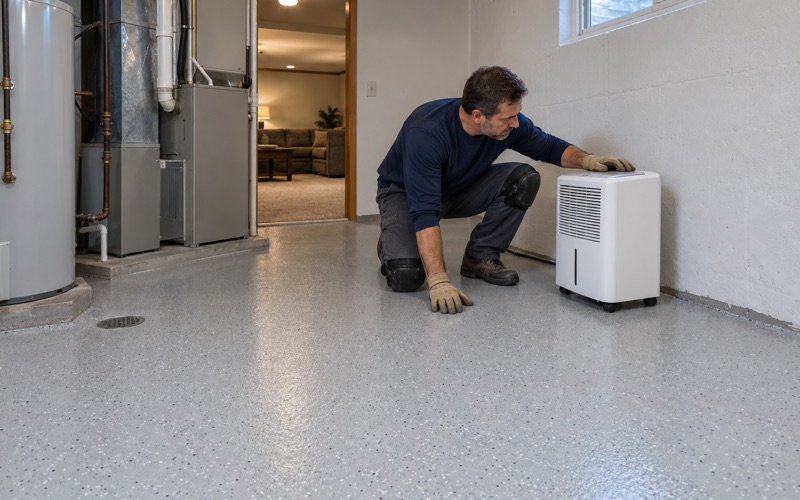
Crystal Lake Epoxy Flooring has spent more than 20 years installing epoxy flooring in Prospect Heights and across the northwest suburbs, and the rooms we are asked about here are not only garages. Some of the more interesting requests involve rooms where things are kept rather than parked: storage rooms, archive closets, display spaces and back rooms in office suites. Those floors have different jobs from a garage slab, and the system we propose follows from the job.
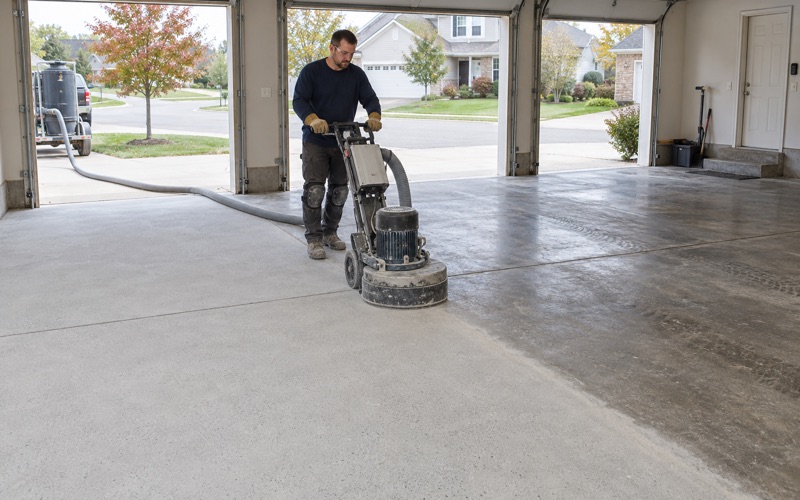
We open every slab mechanically with a diamond grinder or shot blaster before any coating goes down, and we never rely on acid etching. Moisture testing sits in the written scope as its own line, so a room meant for stored objects is checked before it is sealed rather than after a coating lifts. The proposal names the product, the system build and the finished thickness, so an owner or a board can compare what was promised with what was installed.
This page looks at one kind of room in particular: a small collection space in rented commercial space, where carpet often comes with the lease and the concrete underneath was never finished. The same reasoning applies to anyone in Prospect Heights storing textiles, documents, artwork or family heirlooms on a slab, from a condominium storage room to a home basement.
A Heritage Collection on Wolf Road
The Mongolian Heritage Center at 1301 S Wolf Road
The Mongolian Heritage Center is a young 501(c)(3) nonprofit working out of 1301 S Wolf Road, an office building on the Wolf Road business corridor. Its stated purpose is to preserve Mongolian culture and heritage and share it, and its membership page says member dollars support developing programs and “preserving our collection.” The center also offers room rentals and hosts gatherings, including a Tsagaan Sar celebration and a visit from Mongolia’s ambassador.
The center is raising money to buy property for its ongoing operations. When its page was read in October 2026, the campaign showed $391,916 raised from 445 donations toward a $429,500 goal, and the page did not say a building had been bought. Until the campaign closes, like many small cultural groups, it works from rented space.
What an office suite usually hands a collection
Listings describe 1301 S Wolf Road as the Piper-Wolf Building, a Class B office property of 21,377 square feet built in the late 1980s. A small organization keeping objects in that kind of building usually inherits whatever floor the last office tenant left, and in suburban office space that is very often carpet over a concrete slab. We have not seen the center’s rooms or its collection, and it is not a customer of ours. We use it here because it shows a floor question that many small heritage groups, congregations and clubs share.
The guidance that frames the rest of this page comes from the Canadian Conservation Institute, whose 2025 design considerations for heritage collection facilities address floors directly. It was written for new facilities and is government guidance, not a code, but its floor points translate cleanly to a rented room. We pass along what it says as installers; collection care decisions belong to the people responsible for the objects.
Looking for epoxy-flooring closer to Salem Lakes? See Epoxy-Flooring Services in Salem Lakes.
Why Carpet Is the Wrong Floor Where Objects Are Kept
Dust that never fully leaves
The guidance is blunt: “Carpet is not recommended in collection spaces.” Its reasons start with cleaning, since carpet is harder to keep clean than a hard floor and tends to accumulate dust. Every footstep through a carpeted storage room lifts some of that dust back into the air, where it settles on shelves, boxes and the objects themselves.
A hard, sealed floor changes the routine. Dust stays on the surface where a vacuum or damp mop can collect it, and a seamless coating leaves no fibers or backing for it to work into. For a group with volunteer help and limited hours, a floor that can be cleaned in minutes is easier to keep up than one that needs periodic deep extraction.
Wool, pests and the risk after a leak
The second reason is pests. The guidance notes that carpet may harbor pests, wool carpet in particular, and heritage collections often hold felt, wool, hide and other animal-fiber materials those same insects feed on. A floor coating is not pest control and does not keep insects out on its own. What it removes is the sheltered, fibrous hiding place a carpet offers between the shelves.
The guidance also warns that carpet can grow mold after a leak or flood if it is not dried quickly. In an office building that can mean a failed supply line, a roof drain or a sprinkler head, none of which a tenant controls. A coated slab does not stop water from arriving, but it gives the water nowhere to soak in and can be dried with squeegees and fans.
Keeping carpet where it belongs
None of this means a heritage center has to strip every room. Event rooms, prayer spaces and classrooms can keep carpet if the group wants its warmth and quiet, because those are not the rooms where objects live. The change usually makes sense in the storage room and any display room, where objects spend most of their time.
When we scope a split like that, we set the transition between carpet and coating at a doorway with a clean edge strip. That keeps the line tidy for visitors and gives each floor its own cleaning routine.
Sealed Concrete in a Light Color
Bare concrete sheds alkaline dust
Pulling up carpet is only half the job, because the slab underneath brings its own problem. The Canadian Conservation Institute says all exposed concrete surfaces must be sealed, since unsealed concrete generates a fine abrasive alkaline dust. That powder drifts onto shelving and objects, and an alkaline, abrasive dust is the wrong thing to settle on textiles, paper or painted surfaces.
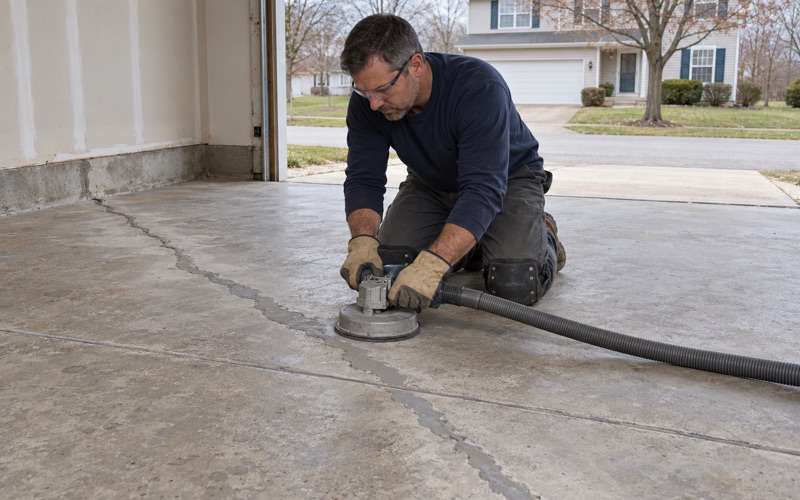
So a slab exposed by carpet removal should not be left bare, even for a season. Old carpet adhesive, tack strip and patching compound come off first, and we grind the slab to an open surface profile so the coating bonds to sound concrete instead of glue residue. The guidance’s own appendix describes two-part epoxy and urethane as well adapted for public or industrial floors, which matches the systems we install.
Light floors make insect activity visible
Color matters here for a reason that has nothing to do with looks. The guidance asks that floors, walls and ceilings be light colored to make insect infestations easier to detect. Small insects, cast skins and frass are hard to spot on dark gray concrete or patterned carpet and much easier to see against a pale, even surface.
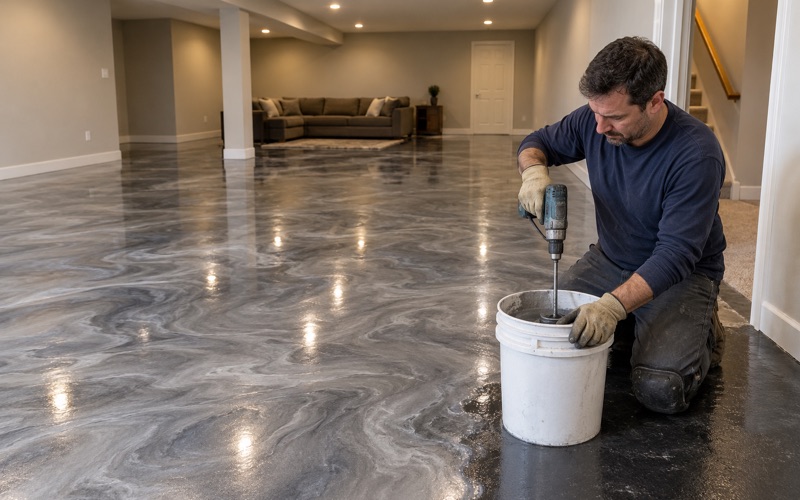
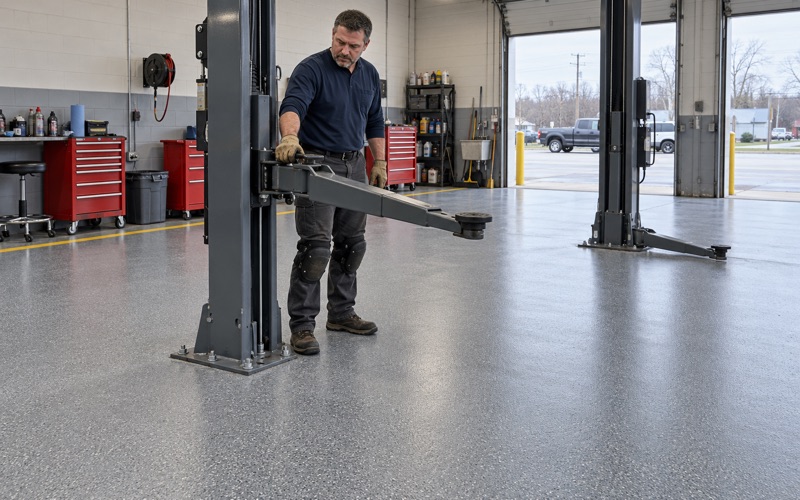
For a collection room we steer toward a light solid color with little or no vinyl flake broadcast, so the floor reads as one uniform field. A busy decorative chip blend hides the same evidence the light color is meant to show. Where a group wants more traction, a fine quartz aggregate in the topcoat adds grip without breaking up the surface the way a heavy flake does.
Testing the slab before it is sealed
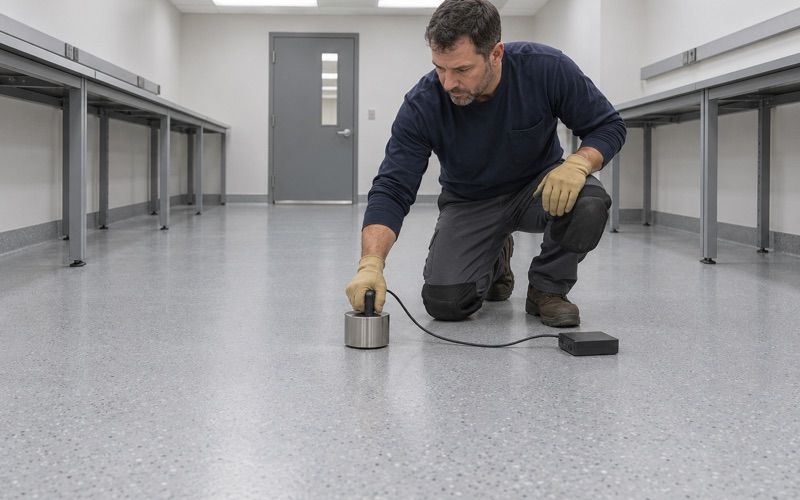
A slab that has sat under carpet for decades can hold moisture no one has looked at, and sealing over it is how coatings blister. We test before settling on the system, using a plastic sheet check, calcium chloride emission testing or in-situ relative humidity probes as the slab and schedule allow. If the readings call for a moisture-mitigation primer, it goes into the written proposal by product name rather than arriving later as a change order.
Planning the Room Change
Four days before objects go back
The step that needs the most planning comes after the floor is finished. The guidance says any acceptable interior finish must have a minimum drying time of four days before any object is introduced into the space. We treat that as a minimum, not a target: if the coating maker’s cure time for the full system is longer, the longer figure governs.
For a small organization that usually means the storage room is out of use for a week or more once grinding and coating days are added. Objects need a temporary home elsewhere in the suite, away from the work, and the move back belongs on the calendar before the first day of prep. A winter job also gets scheduled against slab temperature and dew point rather than the calendar date, since a cold slab cures slowly.
Working inside a shared office building
In a multi-tenant building the floor work has neighbors. We collect grinding dust at the grinder with a vacuum shroud, keep it out of shared corridors and never wash it toward a drain. Work can be set for evenings or weekends when other suites are quiet.
The landlord’s written approval comes before any scope is signed, since a tenant rarely owns the floor it stands on. A lease may also say what has to be restored at move-out, which is worth reading before carpet is removed from a room the group expects to leave someday.
Rules and paperwork before work starts
Prospect Heights handles its own building and permitting as a city, and it expects contractors to be registered and bonded with the city before work begins. We confirm that registration, the bond and our insurance before a job here goes on the schedule, and we keep to the city’s construction hours, which exclude Sundays and observed holidays. For a home job, the written contract and the state’s consumer-rights pamphlet come first as well.
Before anything is signed, we read the warranty exclusions aloud, starting with moisture, and we say plainly if the slab needs repair before it can be coated. A collection room is a long-term decision for a small organization, and the floor should be judged against what was written down rather than a sample board.
- 20+ Years on Local Concrete
- Moisture Testing in Every Scope
- Written Per-Square-Foot Quotes