Crystal Lake Epoxy Flooring has spent more than 20 years on concrete, and our epoxy-flooring in Gilberts work keeps returning to one kind of room: the attached garage under a townhome roof. A shared building changes the order of the job far more than it changes the chemistry. Before a grinder is booked, we want to know who holds the water account, what the association maintains, and how the drive in front of the door is shared.
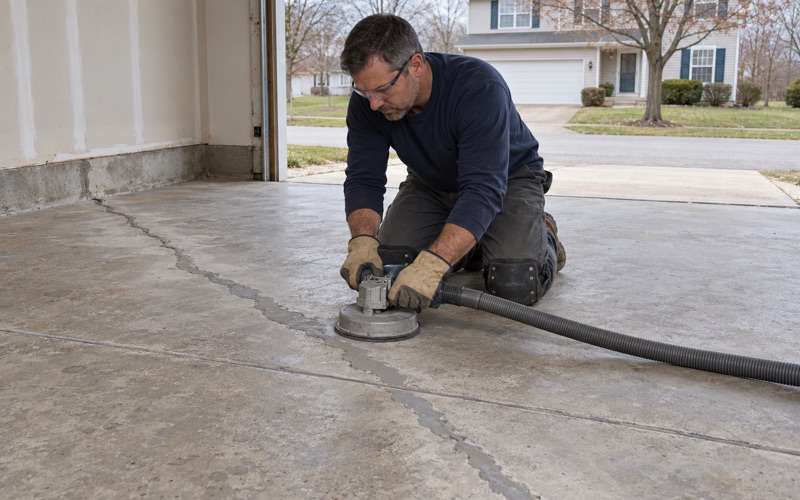
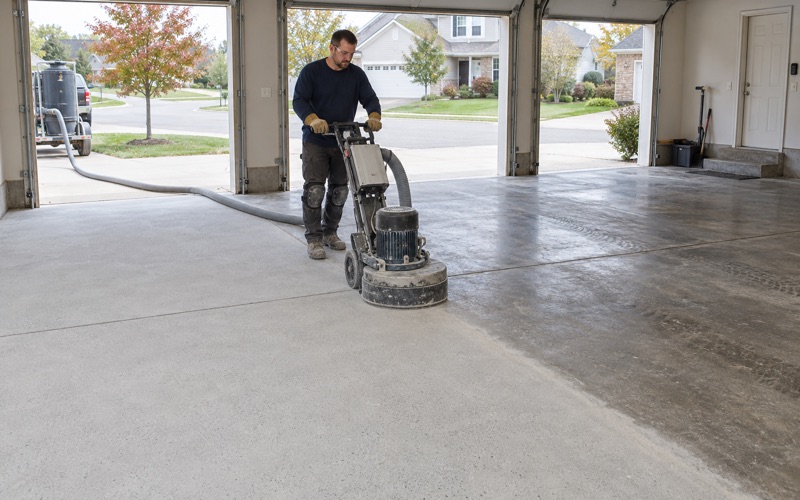
The floor itself gets the same treatment we give any slab. We open the concrete with a diamond grinder or a shot blaster, never with acid, and moisture testing is written into the scope as its own line. The proposal names the product, the system build and the finished thickness, so you can hold the finished floor up against the paper.
What follows walks through the neighborhoods where this matters most, the questions worth putting to your association, and the paperwork the village and the state expect. None of it stands in for your own declaration; that document, not this page, says what your association controls.
Townhome Garages in Timber Trails and Gilberts Town Center
A Quarter of the Village Is Attached Housing
Gilberts is a village in Kane County, and its housing is unusually young, with 74.0 percent of homes built between 2000 and 2019. The 2020-2024 American Community Survey counts 763 single-family attached units out of 3,029, or 25.2 percent of all housing. Of those, 667 are owner-occupied, and that owner is who this page is written for.
That share matters because an attached garage sits inside a building other people also hold a stake in. The slab may be yours to coat, while the walls, the roof over it and the drive outside are often handled by someone else. Sorting that out is the first part of our quote here, not an afterthought.
Ryland’s Two Neighborhoods
Most of those townhomes came from Ryland, in two communities. Timber Trails went up between 2001 and 2007 as a mix of single-family homes, townhouses and condos, and street records put its median build years around 2002 to 2004. Gilberts Town Center was planned as a Ryland master-planned community of 316 units, with townhome designs from 1,764 to 2,185 square feet and finished basements as standard.
A garage slab poured in 2003 has had a couple of decades of tire traffic and winter deicer by now. We read the cracks, the control joints and any earlier sealer before we quote. If a slab needs repair before it can take a coating, we say so in writing rather than burying it under a topcoat.
What the Listings Show About Fees
One Timber Trails townhome at 145 Durango Drive was listed with 1,510 square feet, a two-car garage and an HOA fee of 255 dollars a month. Another listing in the community describes its fees as covering water, insurance, exterior maintenance, lawn care, scavenger service and snow removal. Fees across Timber Trails range from 13 to 326 dollars a month, so not every unit buys the same package.
Those are listing details for particular homes, not a rule for every association in Gilberts. They are reason enough to pull your own statement and declaration before a contractor arrives.
Looking for epoxy-flooring closer to West Dundee? See Epoxy-Flooring Services in West Dundee.
What the Homeowners Association Covers, and What It May Decide
Exterior Maintenance and Where the Garage Falls
Many townhome declarations split a building into what the owner keeps up and what the association handles as exterior maintenance. Where a garage slab lands in that split is something we have not determined for any Gilberts association, and it can differ from one community to the next. Your declaration and the rules your board has adopted are where that answer lives.
A few questions are worth asking before you sign anything with us. Does exterior maintenance reach the garage floor, or does it stop at the overhead door? Does the association say anything about finishes inside a unit’s garage, and does the board keep a form for outside contractors working on the property?
Insurance, Contractors on Site and the Record
When an association carries building insurance, its manager may want a contractor’s certificate of insurance before work begins. We provide ours to whoever needs it, and we would rather it be requested a week ahead than at the curb on install day. Whether the board keeps a list of vendors for the community is a question for the manager, not something we can answer for you.
Keep the board’s answers in writing with the job file. A short email that says what was asked and what came back protects you if a neighbor later wonders why your garage was closed for three days.
Owners, Not Renters
This page is about owners. The Conservancy at Gilberts townhomes were built for rent, and a tenant there would take a garage-floor question to the landlord rather than to us. In Timber Trails and Gilberts Town Center, the owner and the association are the two parties whose answers shape the job.
Water, the Shared Drive and the Neighbors Next Door
When the Association Holds the Water Account
The Village of Gilberts water department sets up water and sewer for most homes, but its own FAQ tells residents of multi-unit dwellings to contact their homeowners association instead. In some communities, as the listings above show, the HOA fee covers water. That makes one plain question important: whose water are we using when we prep the slab?
Our grinding is dry, with dust collected at the grinder, so most water use is cleanup and any moisture work the floor turns out to need. We never wash grinding dust toward a floor drain or storm inlet, which matters more where the inlet at the end of the drive serves the whole row. If the association pays for everyone’s water, a short note to the manager about a hose running for cleanup costs nothing.
Moisture Testing Under a Shared Roof
Moisture testing stays in the scope whether the slab belongs to a detached house or a middle unit. A quick ASTM D4263 plastic sheet test tells us where to look, and ASTM F1869 calcium chloride tests or ASTM F2170 in-situ relative humidity probes give the numbers. Warranty exclusions are read to you before the job is sold, and moisture is the first one named.
Curing follows slab temperature and the dew point spread at the surface, not a date on the calendar. An unheated townhome garage in January may have to wait for spring, and we will tell you so rather than coat a cold slab and hope.
Drives, Party Walls and Noise
A diamond grinder or shot blaster is loud, and in a townhome row the sound carries through the shared wall. We work the hours the village and your association allow, and we suggest telling the neighbors which days to expect it. Equipment and the dust collector sit in your drive, and where a drive is shared, we keep a lane open.
The finished floor needs time before tires touch it, or hot tire pickup can lift a fresh topcoat. On a shared drive that usually means finding somewhere for your car for a couple of days, which is worth raising with the association if guest parking is tight.
Village Registration and the Owner’s Paperwork
Registration, Bond and License in Gilberts
The Village of Gilberts says all contractors doing work inside its limits must register and provide a certificate of insurance and a surety bond of not less than 3,000 dollars. Businesses operating in the village also buy a 25-dollar license renewed each June. Illinois issues no state license for flooring or coatings work, so these local rules are the ones that count, and we confirm them with the village before a Gilberts job goes on the calendar.
Whether a garage floor coating needs a building permit in Gilberts is something we did not find in writing. Community Development at Village Hall, 87 Galligan Road, is the office to ask, and we would rather check than guess.
The Contract and the Pamphlet
Every home job gets a written contract and the Home Repair: Know Your Consumer Rights pamphlet before work starts, as the Illinois Home Repair and Remodeling Act requires. Prices are quoted per square foot for the system we are actually proposing, not a national figure for a two-car garage. Keep the contract beside the board’s emails so the whole record sits in one folder.
Coatings, Ozone and What a Floor Is Not
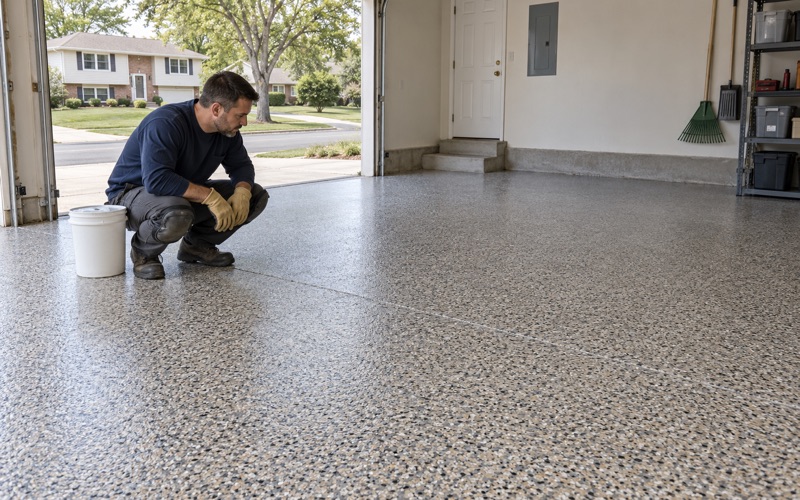
Kane County sits inside the Chicago ozone nonattainment area, and Illinois caps the VOC content of floor coatings at 250 grams per liter under the Illinois Administrative Code, Part 223. That limit binds the installer as well as the manufacturer, so the 100% solids epoxy base and the polyaspartic topcoat we choose both fit within it. For a garage that sees calcium chloride brine and rock salt every winter, a vinyl flake broadcast locked under that topcoat is a build that holds up.
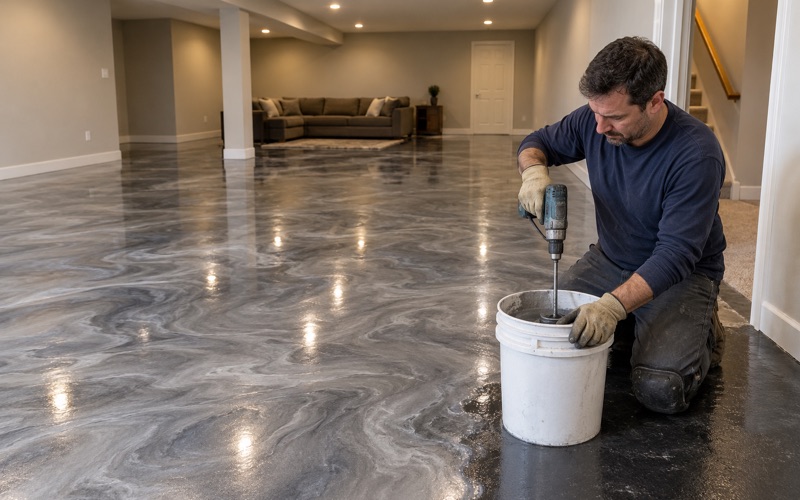
A floor coating is not waterproofing, flood protection or radon mitigation, and we do not sell it as any of those. Radon work in Illinois takes a state radon mitigation license. A finished basement in Gilberts Town Center is its own conversation, and it starts with where any water is coming from.
- 20+ Years on Local Concrete
- Moisture Testing in Every Scope
- Written Per-Square-Foot Quotes