Crystal Lake Epoxy Flooring has more than 20 years behind it, and on epoxy flooring in Cary the question we hear first is not about color or flake. It is about moisture: whether a dry reading on a handheld meter means a garage or basement floor is ready to coat. It does not, and the reasons are worth a few minutes before anyone buys material.
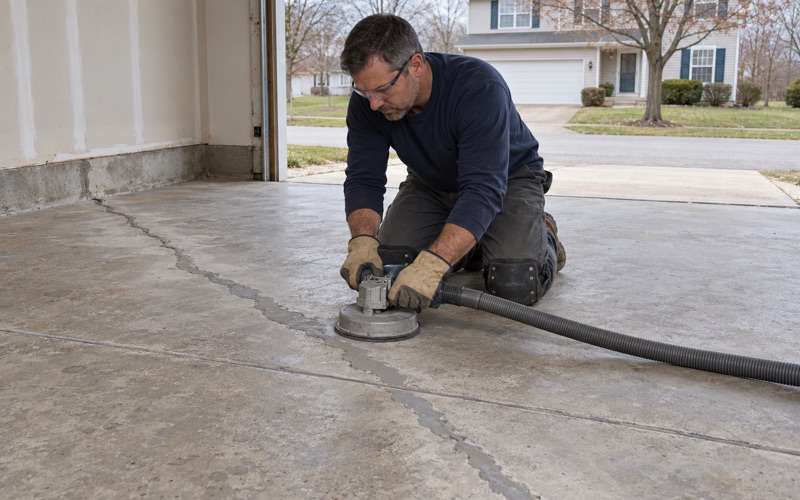
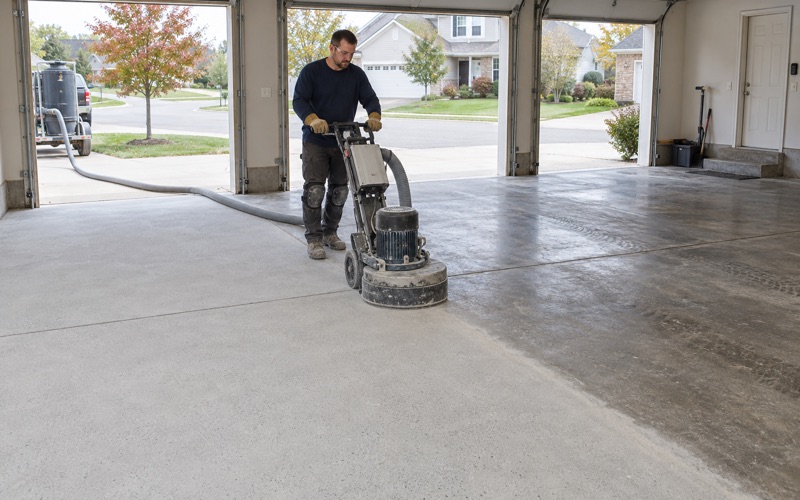
Every slab we coat is opened mechanically with a diamond grinder or a shot blaster, and we never acid etch. Moisture testing sits in the scope as its own line, priced up front instead of offered after a floor has already blistered. The written proposal names the product, the system build and the finished thickness, so what we quoted can be checked against what went down.
This page covers the moisture tools a homeowner can actually get hold of, what each one can and cannot tell you, and the tests coating makers ask for before their product is applied. It also covers the honest options when a slab tests wet.
A Moisture Meter You Can Borrow, and What It Reads
The Library of Things on Three Oaks Road
The Cary Area Public Library at 1606 Three Oaks Road runs a Library of Things, and its Home & Office shelf lists a moisture meter alongside a thermal imaging camera. Most items there go to patrons 18 and older on a one-week loan, with one renewal if nobody has a hold. For many residents, that borrowed meter is the first moisture tool they will ever press against a basement or garage floor.
We think that is a good place to start, with one caution. The library’s listing does not say which kind of meter it lends, whether pin, pinless or a dedicated concrete meter, and the library has no connection to our business. What follows applies to handheld surface meters in general, read against what one meter maker says about its own instruments.
How deep a surface meter sees
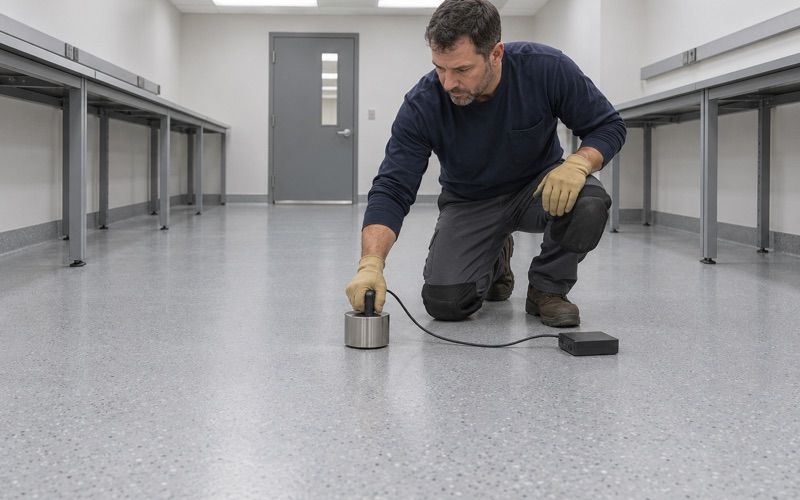
Wagner Meters, which sells both surface meters and in-situ probes, explains that a concrete surface meter sends an electromagnetic signal into the slab and only works down to a 3/4 inch depth. Aggregate, porosity and admixtures all move the number. A slab can read dry in that top skin while moisture sits lower down, waiting for a sealed coating to trap it.
The same maker points to ASTM F2659, under which these meters are for comparative measurement only and are not intended for final flooring decisions. Its advice is blunt: never use a surface meter to make a flooring installation decision.
A screen, not a pass
Where a borrowed meter earns its week is in comparison. Readings that climb near one wall or around a sump pit tell you where to look harder, and a garage that reads evenly from the door to the back wall is at least consistent. We treat a homeowner’s notes from a library meter as a map of where to test, not as a result.
A dry number on the surface is never taken as a clearance on our jobs. That gap between a screening tool and the test a coating warranty is written against is the whole point of this page.
Looking for epoxy-flooring closer to Algonquin? See Epoxy-Flooring in Algonquin.
The Tests Coating Makers Actually Name
The taped plastic sheet for homeowner products
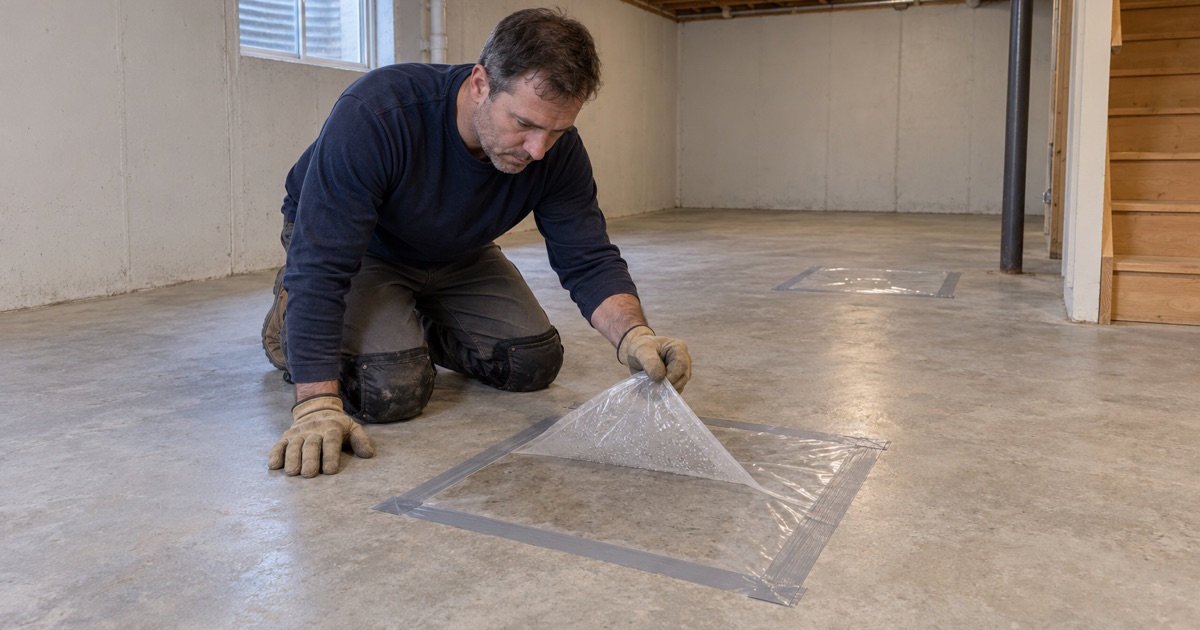
For a garage product sold to homeowners, the maker’s data sheet usually spells out the test. Rust-Oleum’s technical sheet for its Moisture Stop treatment says to tape a 2-by-2-foot plastic sheet to the floor with duct tape and leave it for 24 hours. If droplets form on the inside of the plastic, or the concrete under it turns darker, moisture is trapped in the floor and the sheet says to treat it before coating.
That is a manufacturer’s homeowner check, close in spirit to the ASTM D4263 plastic sheet method, and it is cheap and honest. Its limit is that it is a yes-or-no look at one square of floor over one day. We set sheets in more than one spot and record where each one went, so a single dry square is not mistaken for a dry slab.
In-situ RH under ASTM F2170 for professional systems
A 100% solids epoxy, a polyaspartic topcoat or a urethane cement system carries its own moisture limit, and the method many of those makers point to is in-situ relative humidity under ASTM F2170. Holes are drilled into the slab to a set depth, probes are sealed in, and readings are taken once the concrete around them has settled. The test reads moisture inside the slab rather than at its skin.
Wagner names the F2170 test as the most reliable of the methods it discusses. Some makers instead ask for the ASTM F1869 calcium chloride test, which measures vapor emission at the surface over a set period. We run the test the coating maker names for the system we are proposing, and the readings stay with your proposal; we do not sell a certified report.
Why testing sits in the scope
Cary’s housing went up steadily through the 1970s, 1980s, 1990s and 2000s, so a forty-year-old slab and a twenty-year-old one can sit on neighboring streets. Age alone tells you little about what is inside a particular floor, which is why the test is on the job rather than guessed from the house.
When we go through warranty exclusions with you before anything is sold, moisture is the first one we name. Having a reading on file turns that conversation from a disclaimer into something you can see.
Using the Thermal Camera to Choose Where to Test
What the camera shows and what it does not
The same Library of Things shelf lists a thermal imaging camera. It does not measure moisture in concrete. It shows surface temperature, and a patch of floor that reads colder than the rest might be damp, might sit over a buried pipe or drain tile, or might simply be the strip beside an exterior wall.
That is still useful. A one-week loan lets you scan a basement or garage floor and mark the cold areas with painter’s tape, which gives plastic sheets and probe holes a better place to go than the middle of the room.
Pairing the camera with the meter
Run the camera first, then take the borrowed meter across the cold patches and across a warmer spot for comparison. If both tools point at the same corner, that corner gets a sheet test or a probe. If neither shows any difference, we still test at spread-out locations, because an even surface says little about what lies an inch down.
Bring us the taped-off map and your meter notes when we visit. They save time, and they often show a pattern a single walk-through would miss.
What we read alongside the numbers
A slab can pass a moisture test and still need work. Before quoting we look at cracks, joints and any old coating, and we say plainly when peeling paint, a powdery surface or a crack that has moved means the floor needs repair or replacement before it can carry a coating.
Grinding then opens the surface to the ICRI CSP profile the system calls for. The dust is collected at the grinder and never washed toward a floor drain or a storm inlet.
When the Slab Tests Wet
Wait and test again
Some high readings come from timing rather than from the slab itself. A garage floor that was washed the week before, or concrete that has not finished drying after a patch, can read very differently a few weeks later. In those cases the right move is a second round of testing in the same marked spots before any material is ordered.
We would rather move a start date than coat over a reading we do not trust. Rescheduling costs a little time; a floor that lifts costs the whole job.
Treat the slab within the maker’s limits
Where a reading sits above the coating’s limit, the next step depends on the system. A silicate treatment like the one on the Rust-Oleum sheet, a moisture-mitigation primer under a professional system, or in some cases a dedicated membrane may bring the slab within what the maker allows.
None of those is waterproofing. They manage vapor moving up through concrete; they do not keep water out of a basement. If water is getting in, we start with where it is coming from, whether that is grading, a sump pit or perimeter drain tile, before anyone talks about the finish.
Choose a different system
Sometimes the honest answer is a different floor. A basement slab that keeps reading high may be better densified with lithium silicate and left breathable than sealed under epoxy, and we will say so rather than sell a coating we expect to fail. Because we price per square foot for the system actually proposed, a change of system shows up in the quote, not as a surprise later.
The paperwork before work starts
Illinois issues no state license for flooring or coatings work, so we confirm the Village of Cary’s own contractor registration, bond and insurance rules before scheduling. Every home job also gets a written contract and the Home Repair: Know Your Consumer Rights pamphlet before work begins, as the Illinois Home Repair and Remodeling Act requires.
- 20+ Years on Local Concrete
- Moisture Testing in Every Scope
- Written Per-Square-Foot Quotes