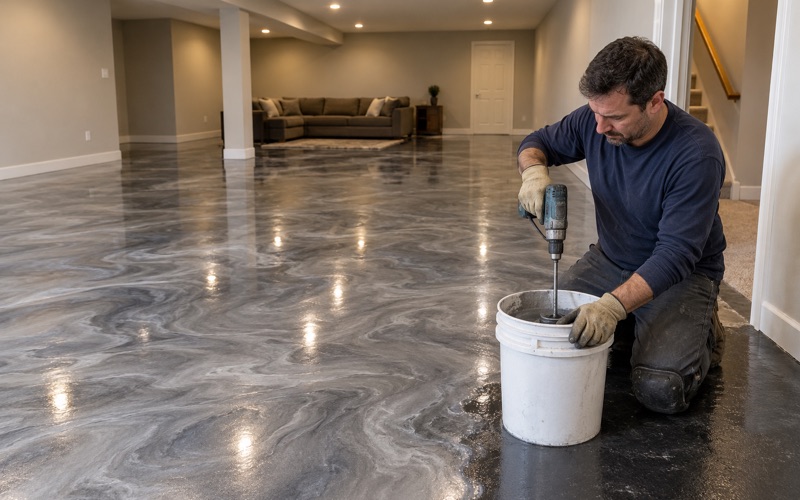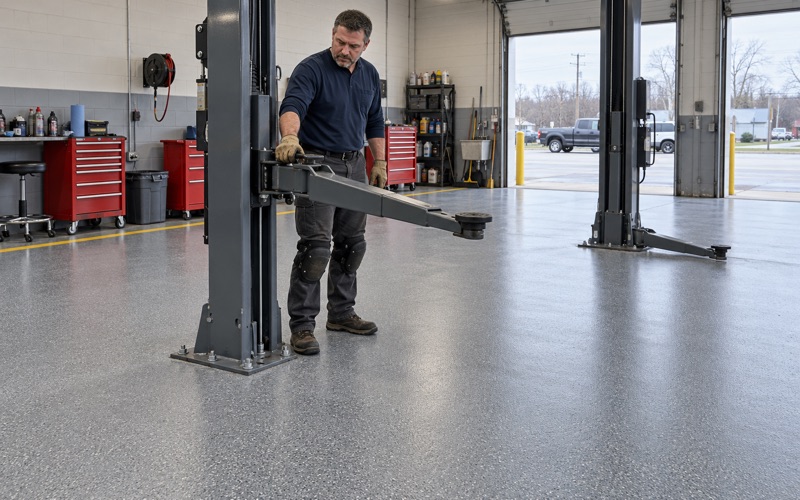
Crystal Lake Epoxy Flooring has put more than 20 years into epoxy flooring in Campton Hills and the surrounding part of the Fox Valley, and the floors we are asked about here are rarely just a place to park a car. They hold harvest bins, tractors, garden tools and the mud that comes in with all of them. What the owner usually wants is a surface that sweeps and rinses clean and stays that way through a long season of hard use.
Most of the people who call us own the building and live with the result. The concrete is often 25 to 55 years old, poured in the 1970s through the 2000s, and it frequently carries a sealer or an earlier coating that has to come off before anything new can bond. We read that history on site and price the system we propose per square foot, so the number fits the slab in front of us.
This page spends its words on one kind of room: the place where food grown in the ground is sorted, set down and held. That can be a working vegetable farm’s packing area or a gardener’s garage in late summer. Both ask the same thing of a floor, and both reward planning the floor as a cleanable surface from the start.
A Farm Store on Burlington Road and the Rule Behind the Floor
Strom Family Farm and its self-serve store
Strom Family Farm grows vegetables at 43W424 Burlington Road, and the address sits inside the village in Campton Township even though the mail goes to Elgin. The family describes fresh, high-quality produce, raw honey and old-fashioned soap, with a self-serve farm store open through the growing season. It is a good local picture of how food moves here: out of the field, under a roof, onto a shelf.
We have not seen the farm’s buildings, and its packing practice is its own business. We name it because it shows what kind of floor question exists in Campton Hills, not because it is a client. The rule we describe below applies to farms according to their own circumstances, which only the farm and its advisers can judge.
What the produce safety rule says about floors
The federal produce safety rule, 21 CFR 112.126, covers buildings on farms that grow, harvest, pack or hold covered produce. It asks for buildings suited in size, construction and design to maintenance and sanitary operations. It also says the farm must take measures to prevent contamination of produce and food contact surfaces from floors, walls, ceilings, fixtures, ducts or pipes, and from drip and condensate.
In plain terms, the floor is named as a possible source of contamination, the same way a leaking pipe overhead is. Whether a particular farm is covered depends on its sales and on exemptions the rule spells out, which is a question for the farm. Our part starts where the owner has decided the floor needs to be easier to keep clean.
Where a coating stops
A coated floor is a tool, not a status. No coating makes a farm compliant with the produce rule, and none replaces the cleaning routines, worker practices and records a farm keeps for itself. We give no food-safety or regulatory advice, and we say so before a proposal is written.
What we can promise is narrower and more useful: a surface with no dust, no open pores and no soft joints for soil to settle into. That makes the farm’s own sanitation work go faster and leaves less to argue with.
Looking for epoxy-flooring closer to Lindenhurst? See Epoxy-Flooring Services in Lindenhurst.
Field Soil, Harvest Crates and Wash Water on a Packing-Room Slab
The muddy side and the clean side
A packing room on a vegetable farm has two ends whether anyone draws a line or not. Bins arrive from the field with soil on the bottoms and on the boots of whoever carries them. Washed and sorted produce leaves from the other end, and the floor between them decides how much of the first end travels to the second.
We help owners make that line visible on the floor itself. A change of color or texture at the receiving side, a broom-and-rinse zone where field traffic stops, and a smoother, easier-to-wash surface where packing happens all make the separation easier to keep on a busy day. The floor cannot enforce the habit, but it can make the habit obvious.
Why bare concrete works against a clean room
Old broom-finished concrete dusts as it wears, and every pass of a pallet jack grinds a little more loose. Cracks, pits and open control joints collect field soil and hold wash water long after the hose is off. A harvest crate set down on that surface picks up what the slab is holding and carries it back to the produce.
Bare concrete also drinks water, so a floor washed in the evening can still be damp the next morning. That dampness is where soil turns to film and where organic residue lingers. A sealed floor sheds water to wherever the owner squeegees it, and it dries in hours rather than overnight.
Drip and condensate from above
The rule names drip and condensate beside the floor for a reason. Coolers, uninsulated roofs and cold water lines sweat in humid weather, and that water lands on whatever is underneath. A coated floor will show those drips plainly rather than absorbing them, which helps the owner find and fix the source.
We point out where we see condensation staining during a site visit. Fixing a dripping line is a plumbing or insulation job, not ours, but finding it before the floor goes down saves a new coating from a slow stain.
Building a Sealed, Washable Floor Where Produce Is Handled
Opening the slab and reading it first
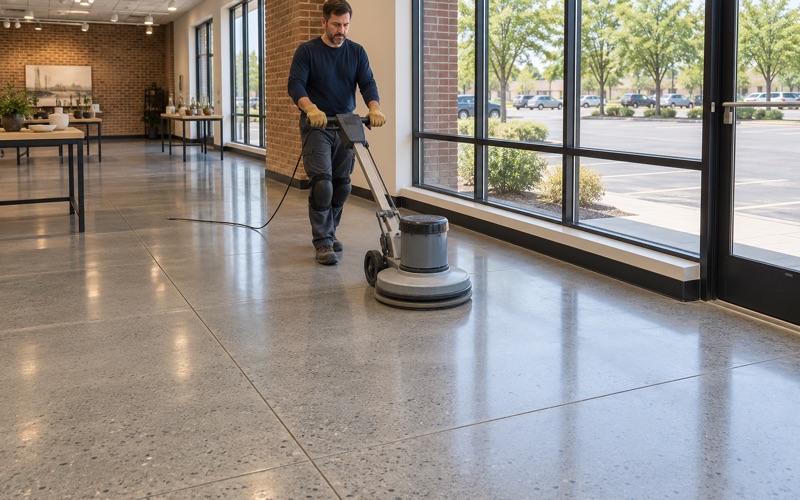
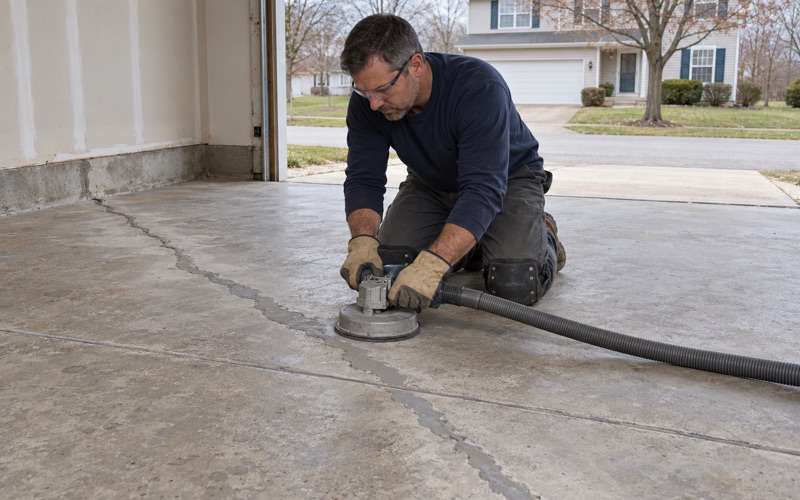
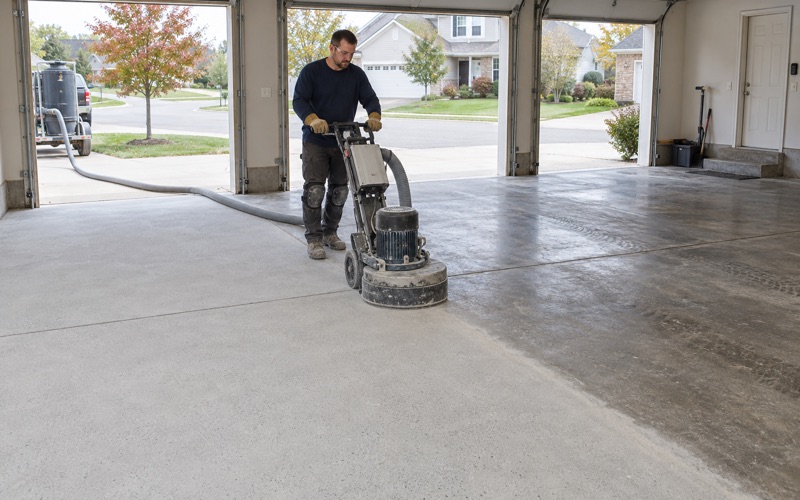
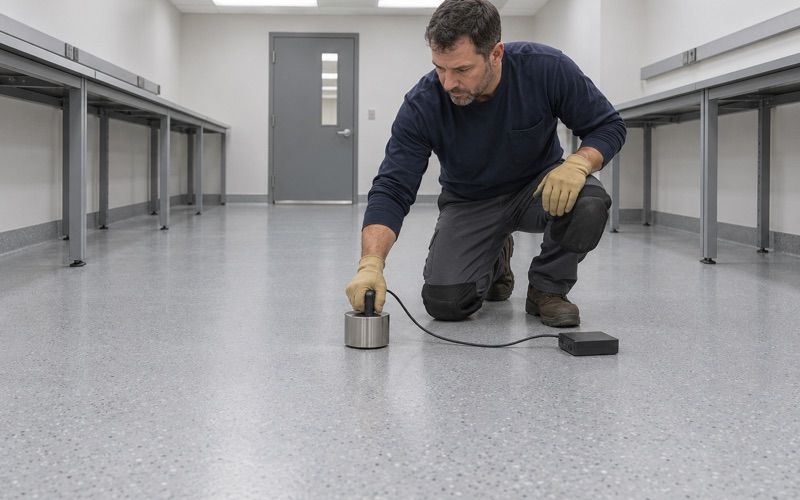
A working-building floor starts the same way our garage floors do: the surface is opened with a diamond grinder or shot blaster to a measured ICRI surface profile, never with acid. Dust is collected at the grinder, which matters even more in a room where food will be handled. Moisture testing is written into the scope, because an older slab on grade with no vapor retarder can push enough vapor to lift a coating from underneath.
We also walk every crack and joint before quoting. Moving joints are filled with a semi-rigid polyurea joint filler that stays tight with the slab, and broken or heaved sections are flagged plainly for repair or replacement. A tight surface without gaps is the whole point of the job, so we do not coat over a joint that will open again.
Choosing the system for wet, gritty work
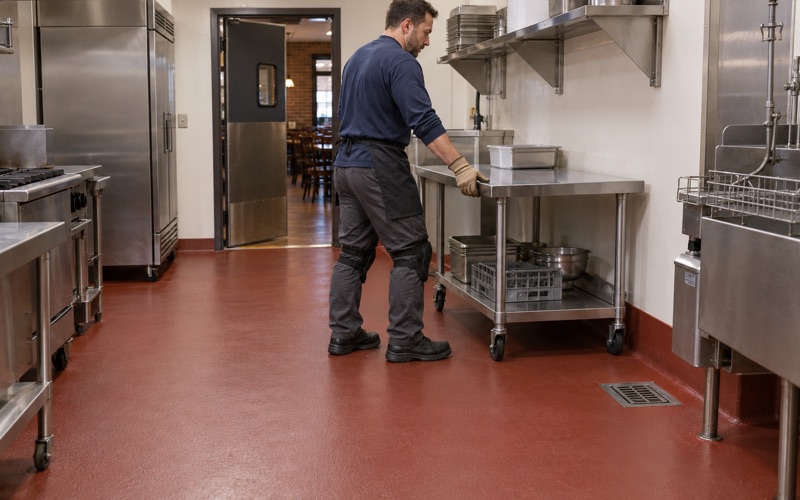
For a packing or holding room, we typically propose a 100% solids epoxy base with a quartz aggregate broadcast for grip on a wet floor, finished with a polyaspartic or polyurea topcoat that stands up to scrubbing. Where hot water, steam or a walk-in cooler is involved, urethane cement is the better choice because it tolerates heat and thermal swings that would stress a thinner epoxy. The texture is tuned so a squeegee and a stiff brush still clean it.
Our written proposal names the product, the build and the finished thickness, so the owner can check what went down against what was quoted. Curing is scheduled against slab temperature and dew point, which in an unheated farm building may mean waiting for warmer weather. A floor rushed into cold concrete is the one most likely to fail.
Keeping crates off the concrete
Even the best floor is still a floor. Harvest crates and bins belong on pallets, racks or carts rather than set directly on the surface, and we plan layout with the owner so there is room to do that. Rack feet sit on the finished coating, and we can add a cove or curb at walls so wash water does not wick into the base of framing.
The last piece is housekeeping after we leave. We hand over plain cleaning guidance: sweep first, wash with a mild cleaner, squeegee, and leave no standing water where produce is handled. A sealed floor makes those steps quick, and quick steps are the ones that get done every day.
The Home Gardener’s Garage and What the Village Reviews
Harvest bins and a floor that hoses clean
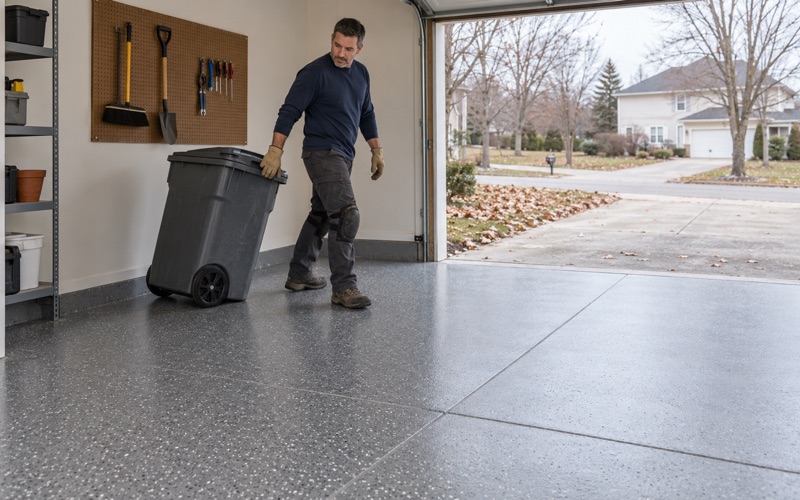
Plenty of Campton Hills households grow far more than a few tomatoes, and the garage becomes a sorting room from July into fall. Bins of squash, potatoes and onions sit on the slab beside the mower and the car. The same logic as the farm applies at a smaller scale: keep the bins up off the concrete and give the floor a surface that rinses clean without soaking in.
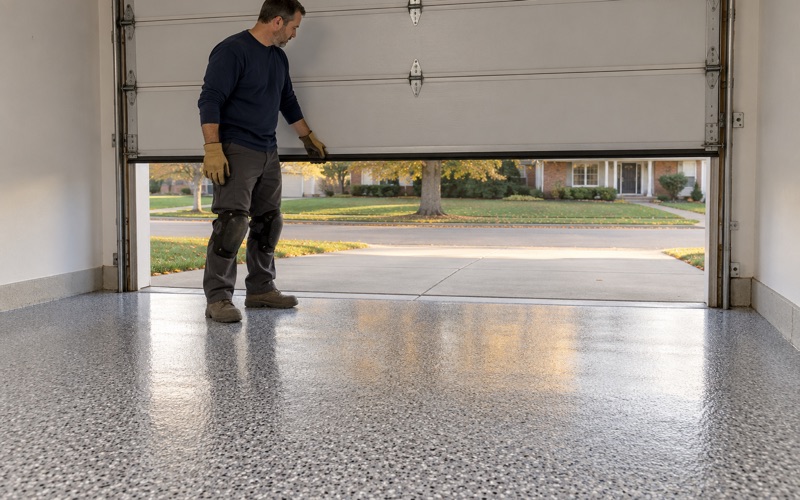
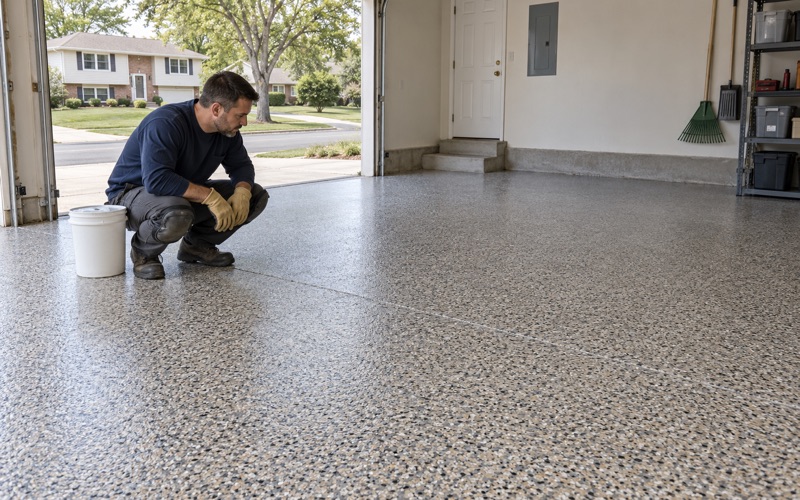
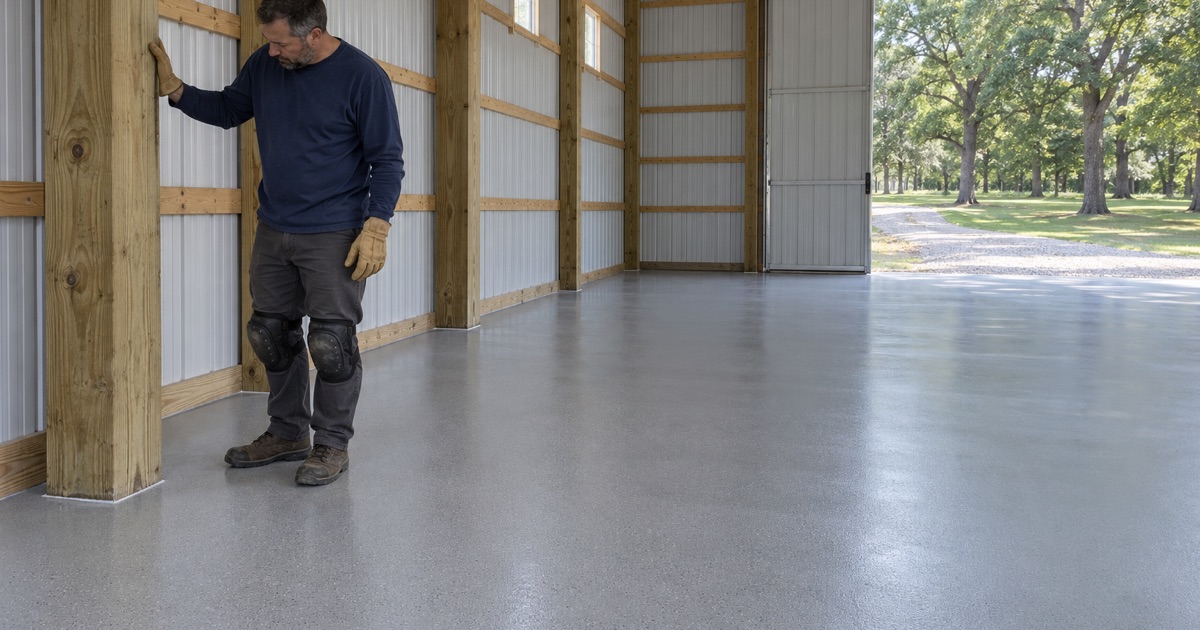
A flake or quartz broadcast system on a ground slab handles that easily, and it handles the winter that follows. Garage floors we build are made for the calcium chloride brine and rock salt that come in on the tires each winter, so the same coating that rinses off garden soil in September rinses off road salt in January.
Permits and the Building and Zoning Department
The Village of Campton Hills took over its own permit reviews from Kane County in August 2011, and its Building and Zoning Department handles that work today. The village lists finished basements and remodels among the projects that need a permit. A floor coating on its own is not on that list, but when it is part of a larger finish or an outbuilding project, the department decides what applies.
We confirm the village’s contractor registration, bond and insurance expectations before scheduling. Every home job also gets a written contract and the state’s consumer-rights pamphlet before work begins, and every coating we choose sits within the Illinois limit on VOC content.
When a slab should wait
Some floors are not ready for a coating, and we would rather say so than collect a deposit on a floor that will peel. A slab that tests high for moisture, carries an old coating that will not release, or has cracks still moving needs another step first. Warranty exclusions, with moisture at the top, are read aloud before anything is signed.
That honesty is part of the floor. A packing room or a garden garage depends on a surface that stays sealed for years, and the only way to get there is to start with concrete that can hold one.
- 20+ Years on Local Concrete
- Moisture Testing in Every Scope
- Written Per-Square-Foot Quotes