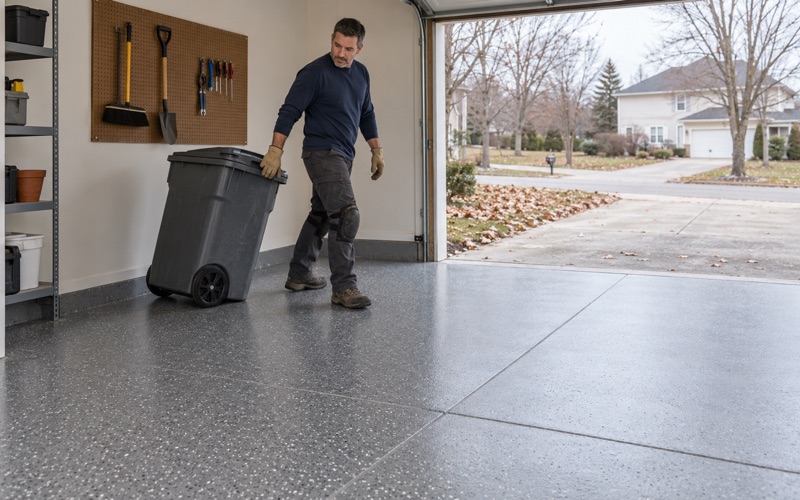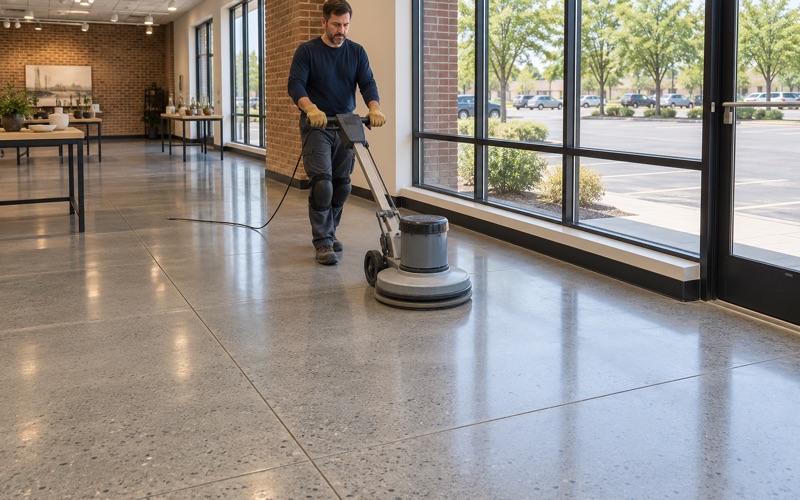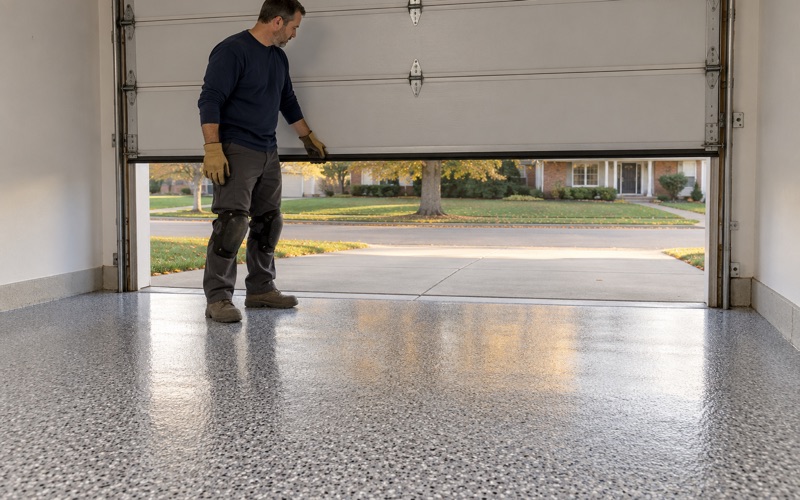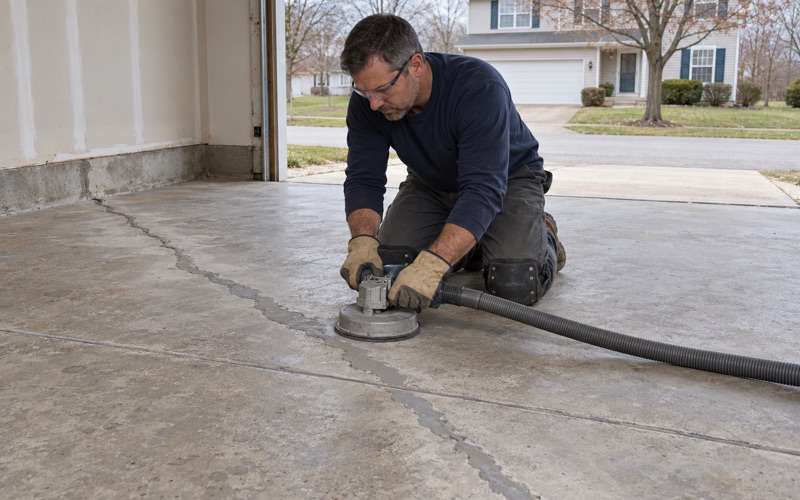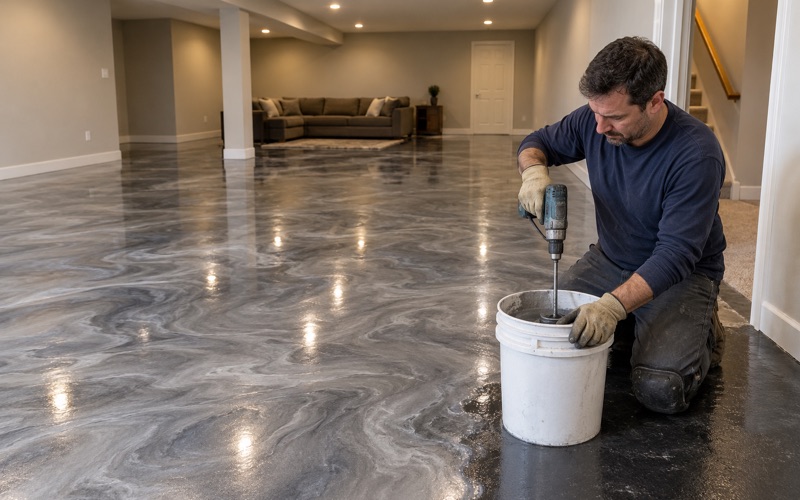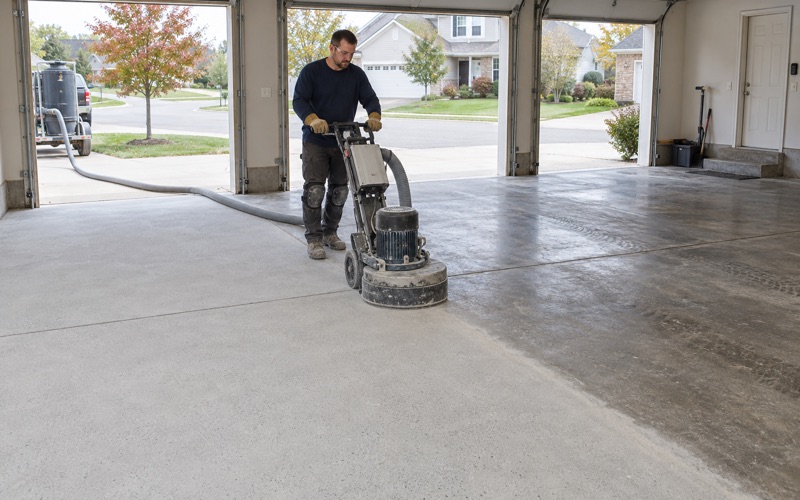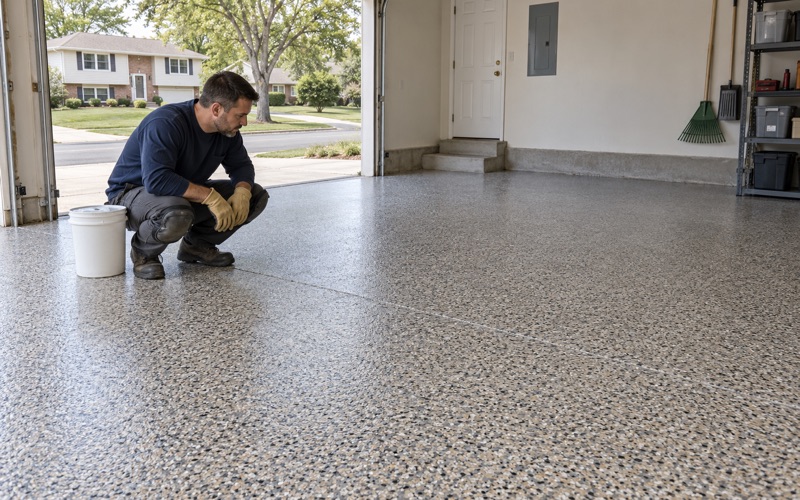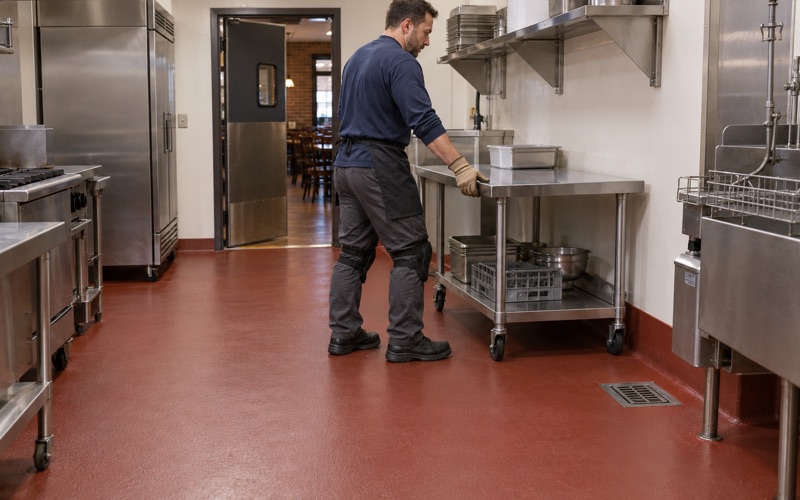
Crystal Lake Epoxy Flooring has spent more than 20 years on epoxy flooring in Algonquin, and every job we take starts at the concrete rather than the color chart. We open each slab with a diamond grinder or a shot blaster, never acid, so the primer bonds to a real surface profile instead of sitting on laitance, old sealer or dirt.
Before we price a garage or basement, we look at what the slab is already telling us: the cracks, the control joints, any coating that is starting to lift. Moisture testing is written into the scope as its own line, and the proposal names the product, the system build and the finished thickness, so you can check what went down against what was quoted.
For some homes here, the most important question is not which flake blend to choose but whether the floor has recently been underwater. That question shapes the whole job, which is why most of this page is about cleanup, drying and testing rather than finishes.
The Fox River Through Algonquin and the Floods of 2013 and 2017
A river through the middle of the village
The Fox River runs north to south through downtown Algonquin, with the Fox River Trail along its banks and Cornish Park and Riverfront Park at the water’s edge. The village sits in both McHenry and Kane counties, and the riverside neighborhoods are where a basement or garage slab is most likely to have taken water at some point.
That history matters to a floor project. A slab that has been under floodwater carries silt, residue and trapped moisture that a showroom sample never had to deal with, and those conditions decide what can be applied and when.
April 2013
In April 2013, after nearly five inches of rain fell in Algonquin within 24 hours, the village declared a state of emergency as the Fox River rose above its flood stage. Neighborhoods along the river flooded, and a resident on La Fox River Drive reported eight inches of water in her basement. Public Works set out sandbags at LaFox River Drive at Cornish Park, at Riverfront Park and at other riverside corners.
The National Weather Service logged a record stage of 12.70 feet at its Algonquin gauge on April 23, 2013. Other agencies and news outlets have published different figures for later floods, because each reads a different gauge, so we treat any single crest number as one source’s reading rather than the final word.
July 2017
Four years later the river came back. On July 13, 2017, the village president proclaimed a disaster for severe flooding, with major flood stage at the Algonquin tailwater set at 12 feet. By the July 18 crest, water had reached riverside garages and basements, and county emergency officials were urging residents to move belongings out of the basement to higher ground.
For anyone living near the river, those two floods are the practical backdrop to any floor project. A garage or basement on those streets should be planned on the assumption that high water may return, which changes how we sequence the work, which materials we suggest and how much access we leave around pumps and drains.
Looking for epoxy-flooring closer to Fox River Grove? See Epoxy-Flooring Services in Fox River Grove.
Why a Coating Comes After the Flood, Not Before It
What a floor coating can and cannot do
We say this plainly on every basement job: an epoxy floor is not waterproofing, and it will not hold river water out of a home. When the Fox River rises high enough to reach a garage or basement, the water comes in through doors, window wells, joints and the edges of the slab, and no resin film changes that.
What a well-built coating does offer is a sealed, nonporous surface. After water recedes, a 100% solids epoxy with a polyaspartic topcoat is far easier to scrub and rinse than bare concrete that soaks up silt, although the slab under it still has to be checked and allowed to dry again.
Pressure from below
In a basement near the river, water can also push up through the floor. Hydrostatic pressure under a basement slab drives moisture through the concrete, and a coating sitting on top of that pressure can blister or lift. Efflorescence, the white mineral crust left as moisture moves through concrete, is often the first sign.
That is why a basement floor starts with where the water is coming from. If the slab is fighting groundwater, the right answer may be drainage work by another trade, a moisture-mitigation primer matched to the readings we measure, or a decision to wait, and we tell you which before anything is sold.
Warranty exclusions, moisture first
Every coating warranty has exclusions, and along the river moisture is the one that matters most. We read those exclusions to you before the job is signed, with moisture at the top of the list, so nobody learns after the next high-water season that a blistered floor was never covered.
Cleaning, Drying and Testing a Slab That Took River Water
Clearing silt and residue
River water leaves fine silt, organic residue and whatever was stored on the floor ground into the concrete. That material has to come off before any assessment means anything. We do not do flood cleanout or remediation, so emptying the space and dealing with damaged walls or belongings is work for the homeowner or a company that handles it.
Once the floor is clear, diamond grinding removes the stained top layer along with any old paint or sealer. Dust is collected at the grinder, and none of it is washed toward a floor drain or a storm inlet.
Letting the slab dry
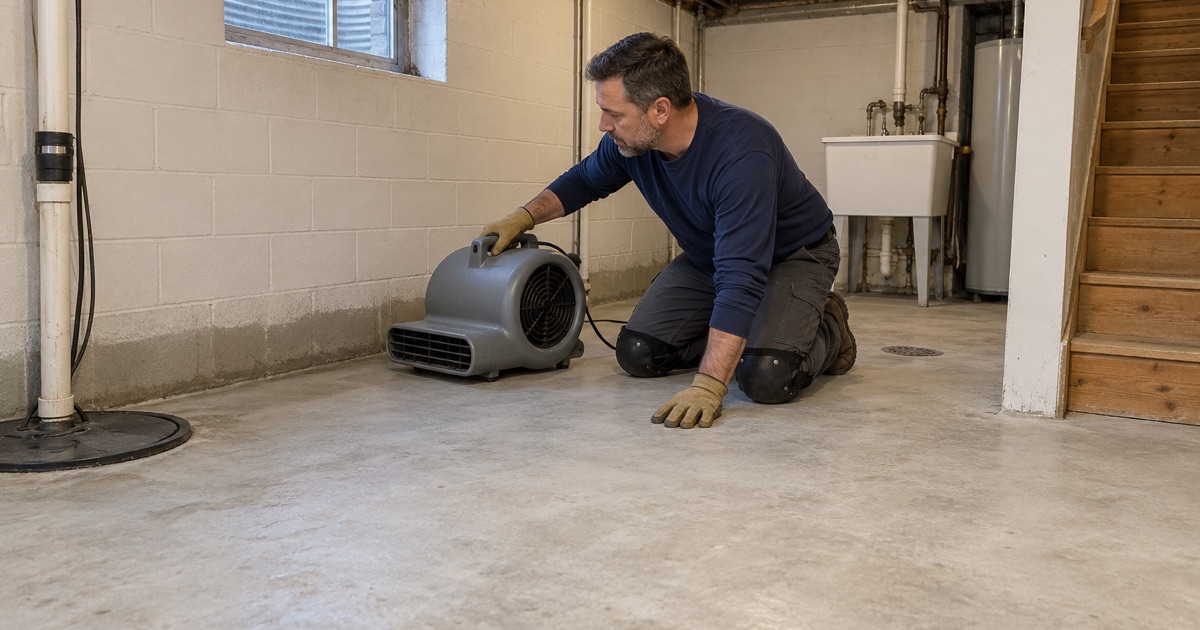
A slab that sat under several inches of water can look dry on top within days while still holding moisture well below the surface. Coating it on that schedule traps water under a film, and that is a common cause of early blistering and peeling on basement floors.
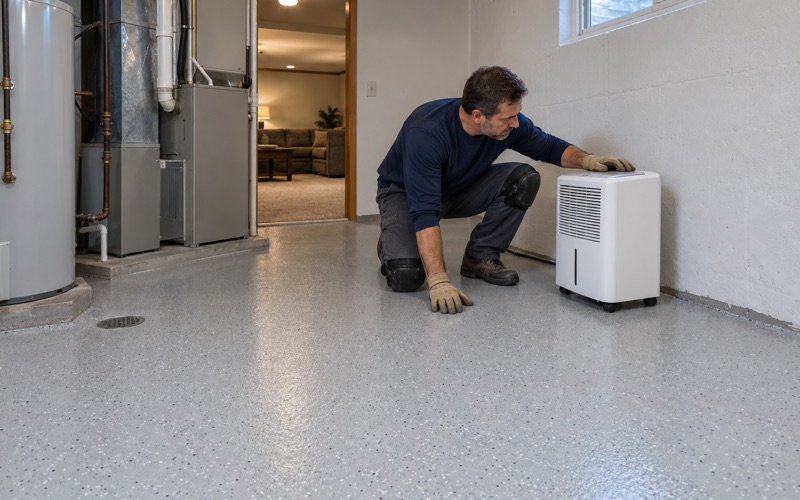
We cannot promise a fixed waiting period after a flood. The slab is ready when the readings say it is, and running dehumidifiers and keeping the space ventilated is what moves that date forward. A homeowner who calls us the week after the water goes down gets a visit, a first set of readings and an honest estimate of how far off a coating is, not a deposit request.
The tests we run
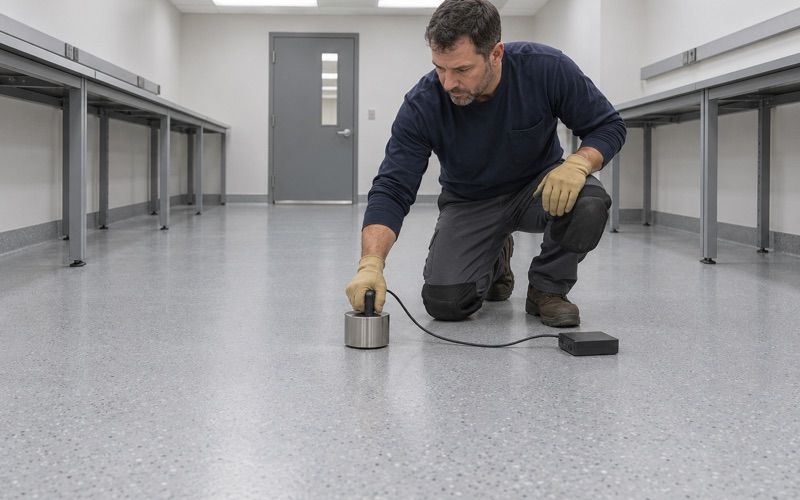
A quick ASTM D4263 plastic sheet test shows whether moisture is still rising toward the surface. ASTM F2170 in-situ relative humidity probes set into the slab then measure what is happening at depth, and where it helps, an ASTM F1869 calcium chloride test adds a moisture vapor emission rate from the surface.
We compare those readings with the coating manufacturer’s published limits and the ASTM F710 moisture thresholds. If the numbers are too high, we say so, and we come back to test again rather than coating on hope.
The grinder also tells us something. A diamond-ground surface should reach the ICRI concrete surface profile the primer calls for, and a slab that stays dark, damp or chalky under the grinder after a flood is one we would rather leave bare for another few weeks than coat now and grind off later.
Coating Around Sumps, Drains and the Next High-Water Season
Keeping sump pits and floor drains open
Many riverside basements rely on a sump pit and perimeter drain tile, and some garages have a floor drain. The coating stops at the rim of each one with a clean, finished edge, so the lid lifts freely, the pump can be pulled for service, and the drain stays fully open.
We never coat over a sump lid or narrow a drain opening for the sake of a seamless look. Access to those points is worth more than an unbroken floor on the day the river rises.
Garages and basements on the riverside streets
Most of Algonquin’s housing went up between 1980 and 2009, but the village also holds a smaller stock of homes built before 1970, and their slabs vary. An older basement floor may have no vapor retarder underneath it at all, while a newer garage slab may be in good shape apart from flood staining. We test each floor on its own terms rather than assuming its age tells the story.
A garage that has taken river water also faces the usual winter load of rock salt and calcium chloride brine from the tires. We build those floors with a topcoat chosen to handle both, and we leave the slope toward the door untouched so water can still find its way out.
Choosing a system that can be cleaned and repaired
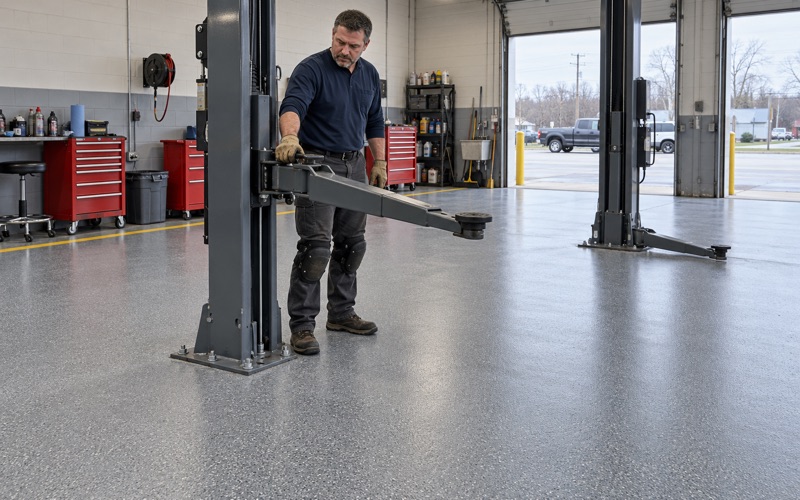
For a floor that may see floodwater again, we lean toward systems that clean up and repair well. A 100% solids epoxy base with a quartz aggregate or vinyl flake broadcast and a polyaspartic topcoat gives a textured surface that scrubs clean, and a damaged area can be ground and patched instead of stripping the entire floor.
Sound cracks and control joints get a semi-rigid polyurea joint filler. If the concrete has heaved, spalled or broken up after repeated wetting, we tell you so and recommend repair or replacement before any coating is quoted.
Permits, paperwork and pricing
Algonquin adopts the 2018 International Residential Code under Chapter 23 of the village code, with local amendments. Whether a particular floor job needs a permit is a question for the village’s Community Development department, and we confirm that, along with any village contractor registration, bond and insurance rules, before the job goes on the schedule.
Every home project gets a written contract and the Home Repair: Know Your Consumer Rights pamphlet before work begins, as the Illinois Home Repair and Remodeling Act requires. Our coatings stay within the Illinois VOC limits for floor coatings, which bind the installer as well as the manufacturer, and the price is quoted per square foot for the system we actually propose.
- 20+ Years on Local Concrete
- Moisture Testing in Every Scope
- Written Per-Square-Foot Quotes